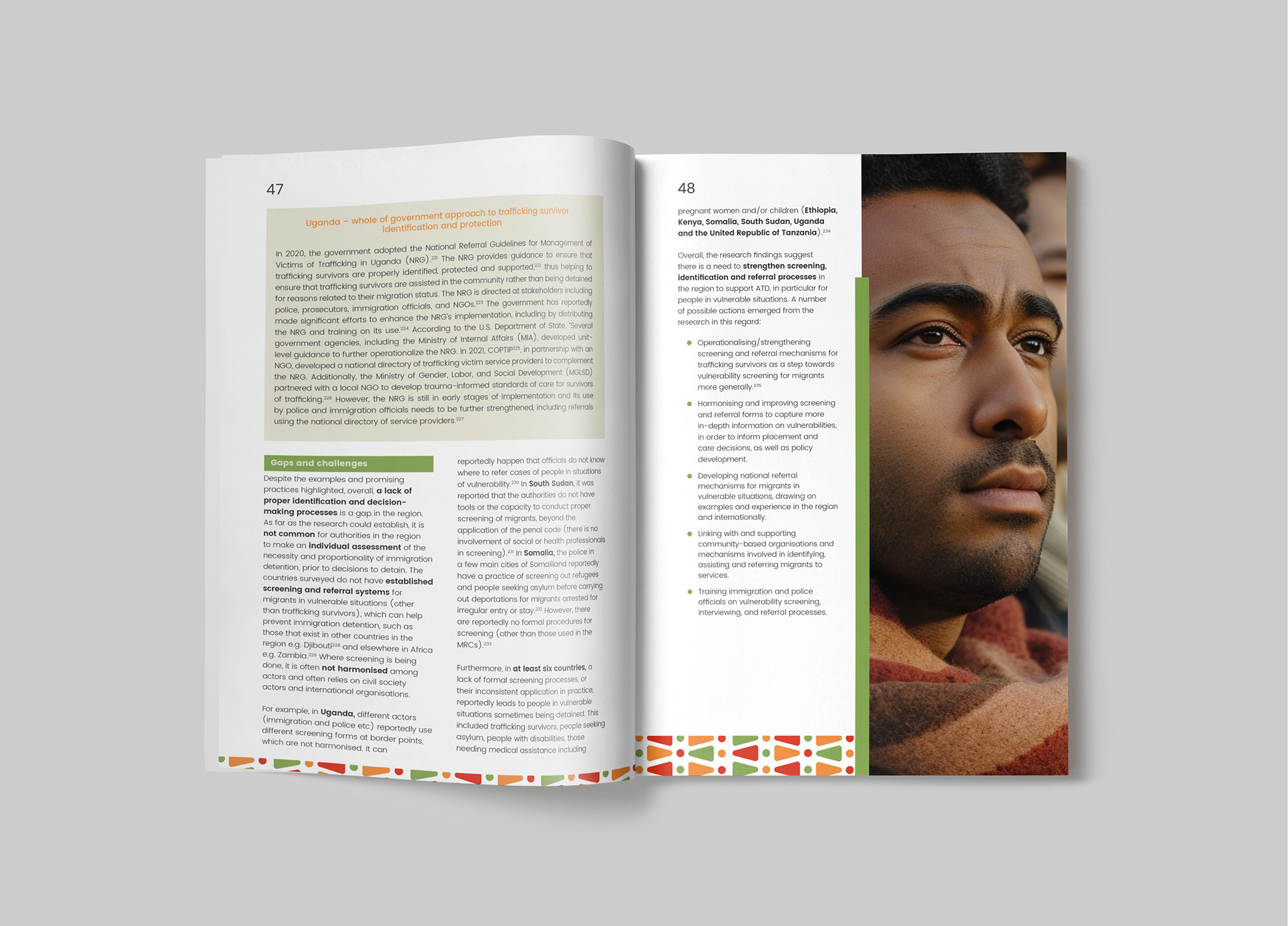
IDC Regional Report — East & Horn of Africa
Project Overview
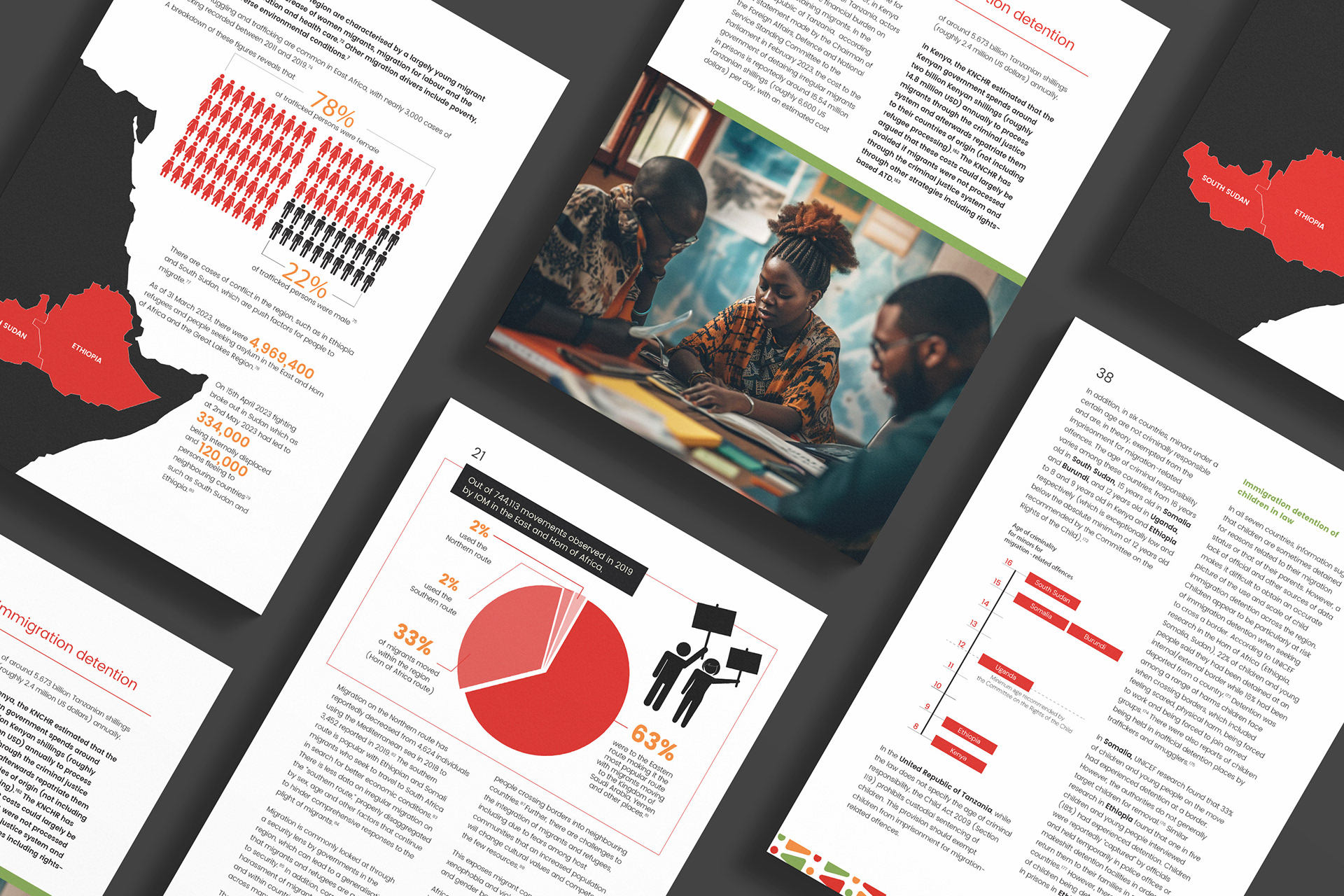
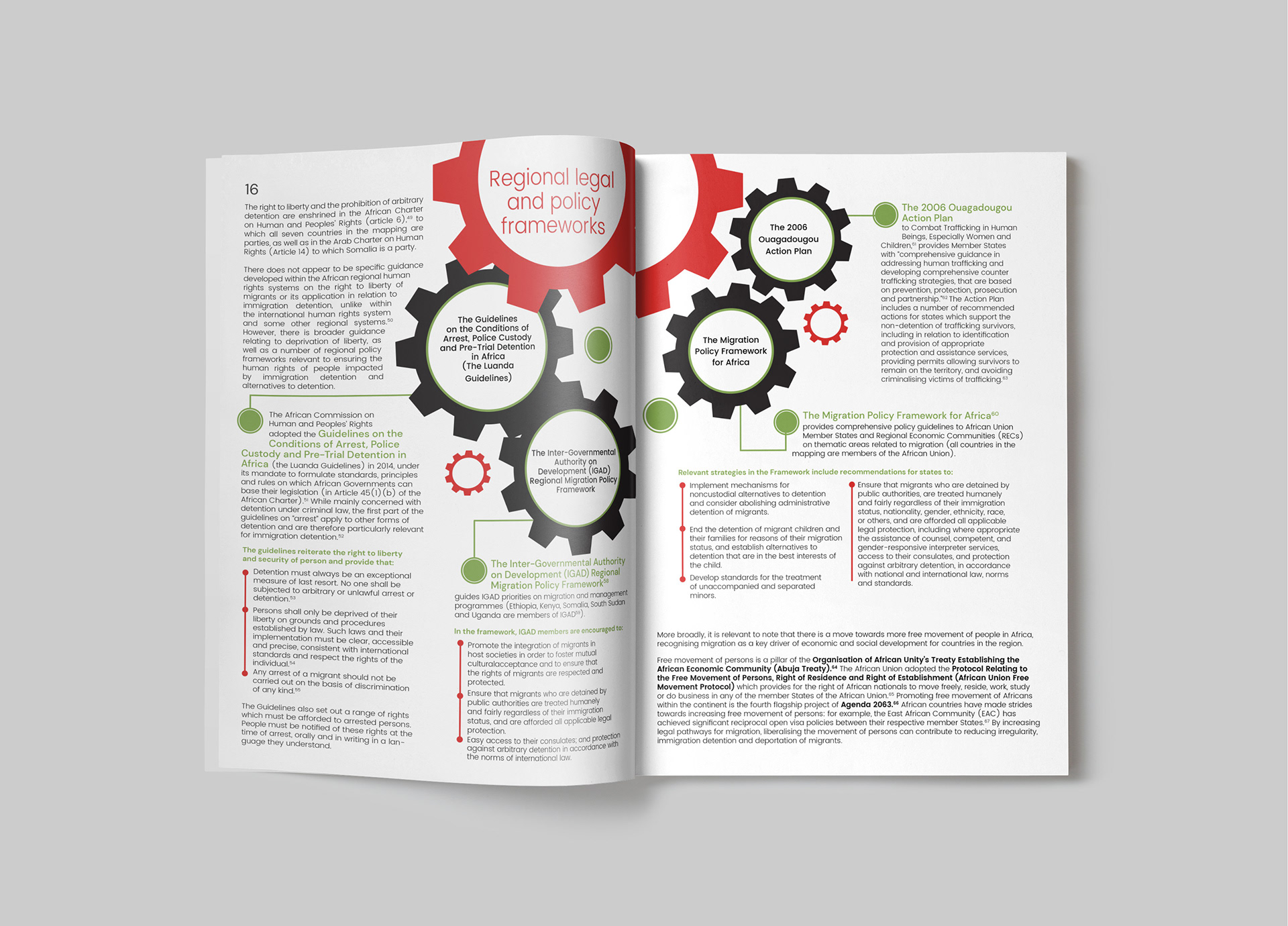
Design and layout of a regional advocacy report mapping immigration detention systems and alternatives across seven countries in East and Horn of Africa. The publication translates complex research into accessible, visual narratives to support policy advocacy.
Design Approach
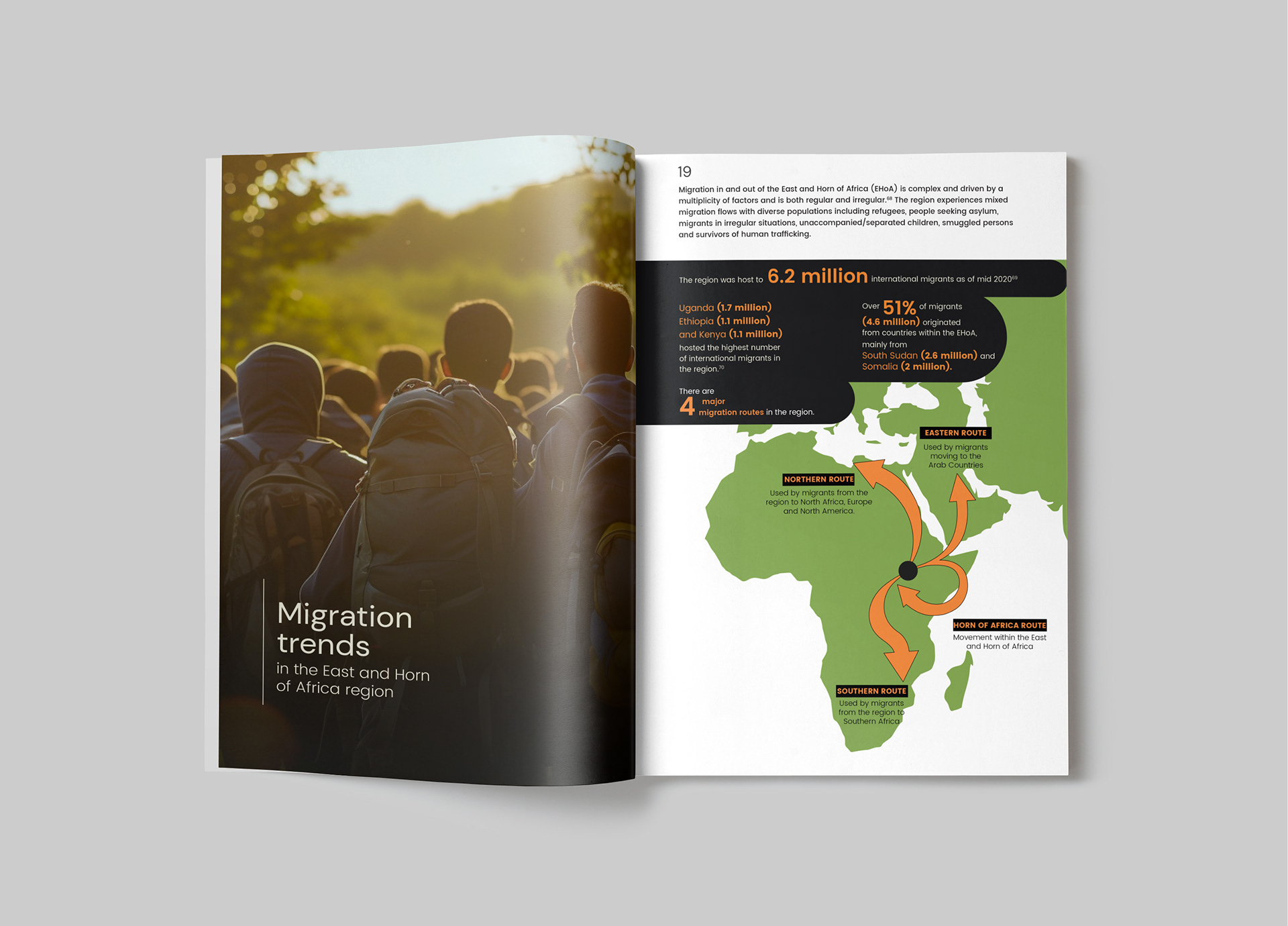
A strategic, visual-first approach was used to surface key findings from a dense research report. Custom maps illustrated regional migration routes and detention patterns, providing clarity beyond text-based descriptions. Visual hierarchy, iconography, and data storytelling guided readers through complex content.
Impact
The report strengthened IDC’s advocacy efforts by improving accessibility and engagement. Communications staff noted that the design significantly enhanced the organization’s ability to communicate findings and influence stakeholders.
Youth Entrepreneurship Factsheet — The Gambia
Project Overview
Design and production of a one-page factsheet translating a technical project summary into a clear, youth-focused communication tool. The factsheet was developed to present project objectives and activities supporting young entrepreneurs in The Gambia.
Design Approach
A clarity-first layout was used to support quick comprehension. The left column features icons and graphic elements for rapid scanning of key facts, while the right side provides a structured project overview. Visual separation highlights the two core program pillars: coaching and cash grants. Youth-centred illustrations reinforce the project’s target audience.
Impact
The factsheet enabled research and program teams to communicate project objectives more effectively to stakeholders. Internal feedback highlighted the strength of the infographics and their value in improving message clarity and engagement.
Darubini Project Factsheet — Tanzania (SRHR)
Project Overview
Consolidation and design of a multi-page project report into a concise, two-page factsheet for the Darubini Project, implemented by TAI Tanzania. The factsheet communicates key Sexual and Reproductive Health challenges and the project’s targeted interventions for adolescent girls.
Design Approach
Complex content was distilled using a structured, visual approach. Content was segmented across two pages to clearly differentiate context (challenges) from action (interventions). Data visualizations, icons, and color-coded sections were used to support readability, retention, and accessibility.
Impact
The factsheet strengthened TAI Tanzania’s ability to clearly communicate sensitive SRHR issues and program strategies. Client feedback highlighted the professionalism of the design and its contribution to more effective project communication.
Other notable publications